
Buying a home in an HPOZ in Los Angeles
Los Angeles lists 35 Historic Preservation Overlay Zones, and exterior work inside one, even paint, goes through City Planning review before you start.

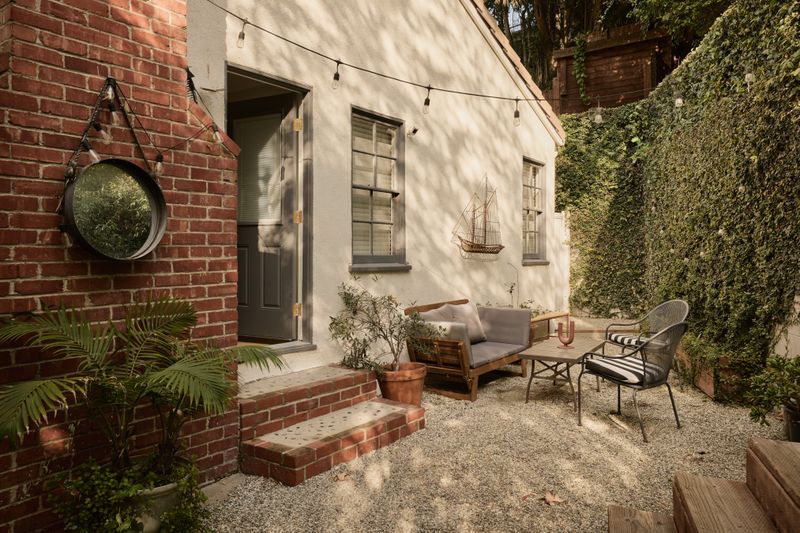
Inside a Los Angeles Historic Preservation Overlay Zone, a new paint color goes through City review. So does landscaping. City Planning says exterior changes in an HPOZ need extra review, including the ones that need no building permit.
The overlay is a layer of zoning on a designated historic neighborhood. For a buyer it means one more approval step between you and the contractor. This is how we walk through it before an offer goes in.
First, confirm the address is actually in one
Don't rely on a listing description or a neighbor's word. The City's mapping tool, ZIMAS, will tell you whether a parcel is inside an HPOZ, and the City's ZIMAS guide lays out the steps.
- Search by street address or parcel number.
- Open the Planning and Zoning Information tab and look under Historic Preservation Review.
- If it says Yes, click through to the Historic Preservation page and its HPOZ tab.
- Check the Mills Act tab to see whether a contract already exists.
From there, the district's own page on the City site has its Preservation Plan, boundary map and planner contact. The list of districts shows 36 entries as of July 2026. One of them, North University Park, is a specific-plan area that uses HPOZ rules, which leaves 35 HPOZs. Hancock Park, Windsor Square, Carthay Circle, Miracle Mile, Jefferson Park, University Park and Highland Park-Garvanza are all on it, along with Angelino Heights.
Districts vary a lot in size. According to the City's program brief, they run from roughly 50 parcels to more than 4,000 properties. Each district has its own Preservation Plan with design guidelines, and its own HPOZ Board that reviews proposed work. The plan for the district you are in is the rulebook that counts.
Then find out how the house is labeled
Every district has a historic resources survey, and it labels each property Contributing, Contributing Altered or Non-Contributing. Contributing properties are treated as the district's historic resources. A Contributing Altered house dates from the district's period of significance and kept its historic character despite later changes judged to be reversible. It gets the same design review as a Contributing one. Non-Contributing means the survey did not identify it as contributing, according to the City's definitions sheet.
The label decides which approval path your projects take. It also matters for the Mills Act. The City says owners of contributing structures can be eligible to enter a Mills Act contract. We cover that program in our Mills Act guide.
What gets reviewed
Anything outside the house. The City's FAQ gives a rule of thumb: all exterior alterations need HPOZ approval, and even replacing a pane of glass can fall in that category. Each Preservation Plan lists what is exempt or handed to staff, so the real answer for a given fence or window sits in that plan. We tell clients to ask the district planner about the specific item before they price it.
Past work matters too. If someone did exterior work on the house without review, City Planning says the owner can face Department of Building and Safety code enforcement and fines. The City's FAQ adds that unpermitted work has to go before the district's HPOZ Board, and the owner may be asked to restore the original condition if it cannot be made to comply. That is a question for due diligence, and it is better asked before you are the owner.
How long approval takes
Every project falls under one of four procedures: Certificate of Appropriateness (COA), Certificate of Compatibility (CCMP), Conforming Work on a Contributing Structure (CWC) or Conforming Work on a Non-Contributing Structure (CWNC). The times below come from City Planning briefs and a review chart dated 2017 and 2019, so confirm current handling times with the district's planner.
| Review type | Typical work | Stated time | Appeal |
|---|---|---|---|
| Certificate of Appropriateness (definitions) | Significant exterior work on a contributing structure, including demolition, removal or relocation | Up to 75 days, longer if appealed (definitions) | 15-day appeal period (City Planning) |
| Certificate of Compatibility (definitions) | New building, building replacement or demolition | Up to 75 days, longer if appealed (definitions) | 15-day appeal period (City Planning) |
| Conforming Work, contributing (definitions) | Routine maintenance, paint color, landscaping and similar lesser work | 3 to 21 days (definitions) | Not appealable (City Planning) |
| Conforming Work, non-contributing (definitions) | Projects on a non-contributing property that do not involve demolition or a new building on a vacant lot | 3 to 21 days (review chart) | Not appealable (City Planning) |
So a repaint on a contributing house is the light end of the scale. The definitions sheet treats a paint color change as conforming work with no certificate application and no fee, and review runs 3 to 21 days. The City's FAQ says there is no fee for minor conforming work, while major conforming work and certificate cases carry fees calculated with the City's Fee Estimator.
A new roofline or an addition is the heavy end. The stated time is up to 75 days, and longer if someone appeals.
What it does to a renovation
Approval comes before construction, not alongside it. The order is: confirm the designation, read the Preservation Plan guidelines, submit through the City's online system, then wait for a Letter of Determination before permits are signed off. Read the guidelines when you first sketch the project, not after the architect has drawn it.
Boards meet twice a month and may cancel when there is no quorum or nothing to review, which can add waiting time. So when you budget, allow for design review of windows, roofs and fences before any contractor goes on the calendar. If an accessory unit is part of your plan, read our ADU rules overview too, since its exterior design would be reviewed as well.
One more thing the City says plainly: the HPOZ program offers no financial incentives of its own, apart from Mills Act eligibility for contributing properties.
A few things people ask us
Is it only the front of the house?
No. The City describes the review as covering exterior work generally, not only the street-facing side. Each plan sets out what is exempt or delegated to staff, so ask the planner about the item you have in mind.
Does an HPOZ raise or lower what a house is worth?
We don't have a number for that, and we won't make one up. The City's FAQ mentions national studies showing higher appreciation in historic districts but names none, and we could not verify them. Review rules can change what a renovation costs and how long it takes. Prices still come down to the property and the market, and our appreciation trends article looks at local data.
Is an HPOZ the same as a Historic-Cultural Monument?
No. An HPOZ is a district-level zoning overlay. ZIMAS shows other historic designations under a separate Other Historic Designation tab, so ask the planner which designations apply to your parcel.
If you are weighing a house in a historic district and want a second set of eyes on the overlay before you offer, contact us.
Sources
- Los Angeles City Planning — Historic District Project Review
- Los Angeles City Planning — Office of Historic Resources Info Brief: Using ZIMAS to Find Historic Preservation Information, July 3, 2019
- Los Angeles City Planning — Local Historic Districts (HPOZs)
- Los Angeles City Planning — Office of Historic Resources Info Brief: About the HPOZ Program, July 3, 2019
- Los Angeles City Planning — Office of Historic Resources Info Brief: HPOZ Definitions, June 27, 2019
- Los Angeles City Planning — Office of Historic Resources Info Brief: HPOZ FAQs, July 30, 2019
- Los Angeles City Planning, Office of Historic Resources — Historic Preservation Overlay Zone (HPOZ) Review Processes, September 13, 2017
Stay informed
Receive our latest writing on architecture, culture, and the Los Angeles market.
