
The Mills Act in Los Angeles and what buyers should know
The City of Los Angeles has paused new Mills Act applications, so most people meet the program as a ten-year contract already attached to a home for sale.

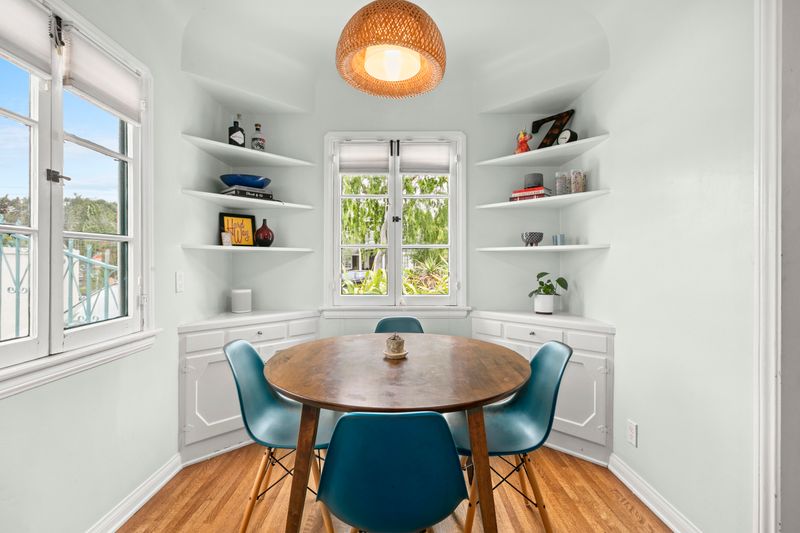
The Mills Act can cut a historic home's property tax in return for a promise to repair it and look after it. In the City of Los Angeles the contract runs for ten years and renews every year, according to City Planning.
You can't apply for a new one right now. As of August 2026 the City's application page says new applications are on hold. So most people meet the program as a contract already attached to a home they want to buy.
What the contract is
It is an agreement between the City and the owner. The owner agrees to rehabilitate the property where needed and keep its historic character. In return the City lets the County Assessor value the home with a formula based on income instead of the usual market approach, as the City's program brief describes it.
The contract renews on its anniversary, so the remaining term is always ten years. The state sets the framework in Government Code sections 50280 to 50290 and Revenue and Taxation Code sections 439 to 439.4. Each city decides whether to take part, who is eligible and how many contracts to allow. The state's Office of Historic Preservation is not a party to any of them.
Why new contracts are paused
The City says it paused applications while it studies the program's long-term funding, staffing and equity. Its draft fact sheet says reopening would take more staff and budget. The program assessment page mentions the City's 2025-26 budget challenges and says City Planning is preparing to update the Mills Act fee structure as part of a wider fee study.
None of those pages gives a restart date.
For background, the last schedule the City published, from the 2019 cycle, ran from a January workshop to a Part 1 application deadline in late February or early March, with contracts recorded in late November or early December. The March 2025 draft lists an application fee of $736 and a contract execution fee of $3,088 as of July 2024. Those are past figures and the fees are under review, so ask City Planning for the current schedule before you count on any number.
Which homes qualify
A property has to be a locally designated Historic-Cultural Monument or a contributing property in an approved Historic Preservation Overlay Zone, known as an HPOZ. If the home you are looking at sits in one, our guide to buying in an HPOZ covers the rest of the rules.
The City's draft describes the current ordinance as also requiring an application to meet at least three of five priority criteria: necessity, uniqueness, investment, affordability and employment.
There are also caps on assessed value before the contract, listed on the City's program page. Properties above them can ask for an exemption, which takes a Historic Structure Report.
| Property type | Limit | Exemption route |
|---|---|---|
| Single-family residence | $1.5 million | Exemption application plus Historic Structure Report |
| Multi-family, commercial, industrial | $3 million | Exemption application plus Historic Structure Report |
| Downtown, Figueroa Corridor and Hollywood Boulevard district areas | Limits described as not applying, and the draft proposes removing this | Not needed |
Where the tax saving comes from
Each year the Assessor looks at three values: the Proposition 13 base year value, the current market value and the Mills Act income value. The lowest one goes on the bill, per the City's FAQ. Only the 1 percent general levy comes down. Special district assessments do not.
The income value is annual net income divided by a capitalization rate. For an owner-occupied home, the income is estimated from comparable rents. The rate adds an interest component set each year by the State Board of Equalization, a 4 percent risk component, the property tax rate and an amortization component. For other property types the risk component is 2 percent. The Board's guidelines say the rate is prescribed by statute rather than derived from sales data.
The City's tax adjustment worksheet shows the arithmetic. These are its 2022 inputs, so read the table as a picture of how the math works, not an estimate for today.
| Step | Result |
|---|---|
| Assumed rent $3,600 a month, less 3% vacancy and 20% expenses | Net income $33,523 |
| Capitalization rate: 2.75% interest + 4% risk + 1.02% tax + 0.6% amortization | 8.37% |
| Mills Act value ($33,523 divided by 8.37%) | $400,514 |
| Tax on $800,000 assessed value versus Mills Act value at 1.02% | $8,160 versus $4,085 |
| Example saving | $4,075 a year, about 50 percent |
The worksheet calls itself a guideline, and the reduced tax is not guaranteed to match it. A long-time owner may see no reduction at all, because the Proposition 13 base year value can already be the lowest of the three. The City's draft policy document cites County Assessor data showing many long-term owners with older contracts saving little or nothing.
What the owner has to do
The owner commits to a rehabilitation and maintenance plan with estimated costs, and the City says owners are obligated to finish what is in it. Review covers the interior as well as the exterior. State law requires the City to inspect every five years.
If an owner falls short, the Office of Historic Resources sends a letter and the Department of Building and Safety may issue an Order to Comply. The Cultural Heritage Commission can then recommend cancellation, and the City Council decides. Under the state's valuation guidelines a cancelled contract carries a fee of 12.5 percent of the property's current fair market value as though free of the restriction.
What changes when you buy one
The contract runs with the property and binds every later owner. The City advises buyers to confirm they accept the obligations.
The tax side is less automatic than it sounds. On a change in ownership the Assessor sets a new base year value, then applies the lowest-of-three comparison again. There is no supplemental assessment on this kind of property. Never assume the seller's current bill carries over to you.
Before an offer, we tell buyers to ask for these:
- A clear disclosure of the contract from the seller, with the work that is done and the work that remains, which is what the City advises sellers to give
- The seller's rehabilitation plan, so you can see what you would be agreeing to finish
- The seller's most recent Mills Act valuation notice from the Assessor
- A side-by-side with the bill you would otherwise expect, which our guide to property taxes after buying a home in Los Angeles walks through
A few things people ask us
Could the rules change?
Yes. The March 2025 draft proposes changes, including raising the multi-family limit to $10 million. Since then the program assessment page has said staff are refining recommendations for the Cultural Heritage Commission and the City Council. The draft is a proposal, not adopted law.
Does this apply outside the City of Los Angeles?
Only where that local government runs its own program. Long Beach does, and it held a pre-application workshop for its 2026 cycle in January 2026. Elsewhere, confirm eligibility with the local planning office.
If you are looking at a historic home and want help reading the contract and the disclosures, contact us.
Sources
- Los Angeles City Planning — Mills Act Historical Property Contract Program | About
- Los Angeles City Planning — Mills Act Historical Property Contract Program | Application
- Los Angeles City Planning, Office of Historic Resources — Info Brief: Mills Act Historical Property Contract Program, July 3, 2019
- California Office of Historic Preservation — Mills Act Program
- Los Angeles City Planning — Mills Act Program Draft Policy Updates and Ordinance Amendments, March 14, 2025
- Los Angeles City Planning — Mills Act Historical Property Contract Program | Program Assessment
- Los Angeles City Planning, Office of Historic Resources — Info Brief: Mills Act Program FAQs, July 3, 2019
- California State Board of Equalization — Letter To Assessors No. 2005/020: Guidelines for the Assessment of Historical Property, March 3, 2005
- Los Angeles City Planning — Historical Property Tax Adjustment Worksheet Guide (revised January 2022), January 1, 2022
- City of Long Beach — 2026 Mills Act Program: Pre-Application Workshop, January 24, 2026
Stay informed
Receive our latest writing on architecture, culture, and the Los Angeles market.
