
How the Measure ULA mansion tax in Los Angeles works
Measure ULA adds 4% to Los Angeles sales above $5.4 million, and it applies to the whole price. A $6 million example, the exemptions and where the law stands.

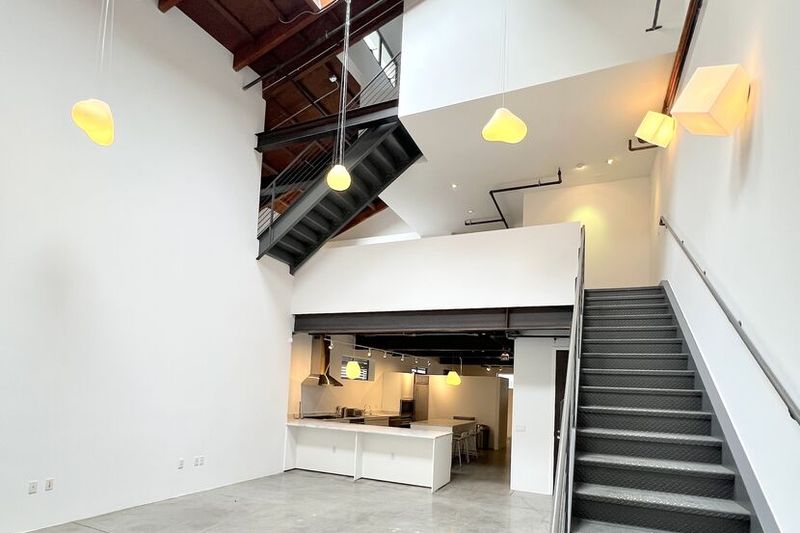
Measure ULA is a transfer tax, and the rate lands on the whole price. Sell or buy in the City of Los Angeles for more than $5.4 million and the city adds 4% on the entire sale price, not just the part above the line. At $10.9 million or more the rate is 5.5%. Those are the figures for closings after June 30, 2026, per the City of Los Angeles Office of Finance.
It sits on top of the regular city and county transfer taxes. Clients ask about it whenever a price lands near the line, so we walk through it the same way each time.
What a $6,000,000 sale looks like
Say a property sells for $6,000,000, with no loan adjustments. ULA at 4% comes to about $240,000. The city's base transfer tax is $2.25 per $500 of value, which adds $27,000. Los Angeles County charges $1.10 per $1,000, collected by the Recorder when the deed is recorded, and on this sale that is $6,600. All of this is arithmetic from the published rates, not a quote for any deal.
| Sale price | ULA rate | City base tax | Combined city rate |
|---|---|---|---|
| Up to $5,400,000 | 0% | 0.45% | 0.45% |
| Above $5,400,000, under $10,900,000 | 4% | 0.45% | 4.45% |
| $10,900,000 or more | 5.5% | 0.45% | 5.95% |
Because the rate applies to the whole price, a sale just over the line costs far more than one just under it. If a price sits anywhere near $5.4 million, that is worth raising with your agent and a real estate attorney early.
None of this is the annual property tax bill. For that, see property taxes after buying a home in Los Angeles.
The line moves every July
The city adjusts both thresholds each year using the Bureau of Labor Statistics chained consumer price index. Last year's lines were $5.3 million and $10.6 million, according to the county Recorder's schedule. The city's FAQ has the current figures.
One detail catches people. ULA is figured on total transaction value, and that includes any loan balance that stays on the property, an assumed loan too. The base city tax is calculated on value net of liens, so the two taxes can be measured on different numbers.
Who pays, and who is exempt
We can't tell you who pays from the published rules. The city's FAQ describes the tax as applying to the document that conveys the property and says nothing about buyer or seller. The county Recorder's page leaves the same question open and puts the calculation on whoever prepares the document. In practice the split is a point in the purchase contract, so ask your agent and a real estate attorney how it would be handled in your deal.
The city's exemptions turn on who the buyer is. Qualified affordable housing organizations, such as certain 501(c)(3) nonprofits and community land trusts, are exempt. So are government agencies and long-established 501(c)(3) entities with assets under $1 billion. A transaction that is already exempt from the base transfer tax is exempt from ULA too.
It is a City of Los Angeles tax. If a property sits partly inside the city, the tax is applied in proportion to the value transferred within city limits. The county transfer tax applies countywide.
Where the law stands this week
The tax is still in force. A Howard Jarvis Taxpayers Association initiative that would have eliminated ULA and similar transfer taxes statewide was pulled on June 25, 2026, before the deadline to withdraw measures from the November ballot.
Lawmakers passed ACA 22 instead. It became Proposition 43 and would have required two-thirds approval for voter-proposed local special taxes approved after January 1, 2027, according to the Secretary of State's summary. It would not have repealed existing taxes.
Voters decided Proposition 43 on November 3. In the unofficial count updated November 5, with 98% of the expected vote counted, No led 57.65% to 42.35%, and NBC projected No as the winner. Results are not final until certified. LAist reported that if voters reject the measure, a simple majority would still be enough for future taxes like ULA.
At City Hall, the Council voted 14-0 on July 1, 2026 to shelve a proposal to exempt new apartment buildings for their first 10 years, so that one never reached the ballot. It did put a narrower measure, Measure TE, on the ballot by a 13-1 vote. TE is an exemption tied to the Palisades Fire. It would apply to residential properties owned as of January 7, 2025 and sold through January 6, 2030, per LAist's voter guide.
In NBC's November 5 count, Measure TE led 60.9% to 39.1%. A city report estimated the exemption could cut ULA revenue by up to 6%, about $32 million a year, LAist reported.
A bill in Sacramento, AB 736, would have kept the tax on single-family homes above $5.4 million at current rates while capping other property types at 1.5%. LAist described its future as uncertain, so check where it stands before counting on it.
What it has raised, and what research found
Los Angeles voters approved ULA in 2022 with nearly 58% support. It applies to conveyances on or after April 1, 2023, and the proceeds are meant for affordable housing projects and help for tenants at risk of homelessness. The city says it has raised more than $1.2 billion since April 2023, as of July 2026.
Early projections were far higher. Officials once estimated up to $1.1 billion a year, while the city had collected about $632.6 million by March 2025, according to Commercial Observer.
A UCLA Lewis Center study by Michael Manville and Mott Smith, reported in April 2025, found that sales priced above $5 million fell by as much as half after the tax took effect. It used Los Angeles County sales data for 2020 to 2024, and the coverage framed the drop as one in commercial sales. The authors also estimated an annual property tax revenue loss of $25 million. These are findings about past sales, not a forecast. For wider context, see our Los Angeles housing market forecast.
A couple of things people ask us
Does ULA change my capital gains tax?
No. They are separate taxes. Transfer tax is charged on the transaction, while capital gains tax depends on your gain and circumstances. Our guide to capital gains tax when selling a home in California covers the second one, and a tax professional can speak to yours.
Will the thresholds change again?
Yes, they are adjusted annually by chained CPI, and the county schedule lists the July 1, 2026 change.
If you are pricing or offering near one of the lines, contact us and we can go through the numbers with you.
Sources
- City of Los Angeles Office of Finance — Real Property Transfer Tax and Measure ULA FAQ
- LA County Registrar-Recorder/County Clerk — Documentary Transfer Tax
- LAist — Sacramento kills ballot measure/ULA status, June 26, 2026
- California Secretary of State — Proposition 43 title and summary
- NBC Los Angeles — California and LA election results 2026, November 5, 2026
- LAist — LA City Council ULA ballot vote, July 1, 2026
- LAist — LA live results, city ballot measures, November 5, 2026
- LAist — Palisades Fire mansion tax measure, August 4, 2026
- Commercial Observer — L.A.'s 'Mansion Tax' Causes Steep Drop in Commercial Sales: UCLA, April 3, 2025
Stay informed
Receive our latest writing on architecture, culture, and the Los Angeles market.
