
Property tax after you buy a house in Los Angeles
Buying in Los Angeles resets your assessed value to market value. A separate supplemental bill then covers the rest of that fiscal year, which ends June 30.

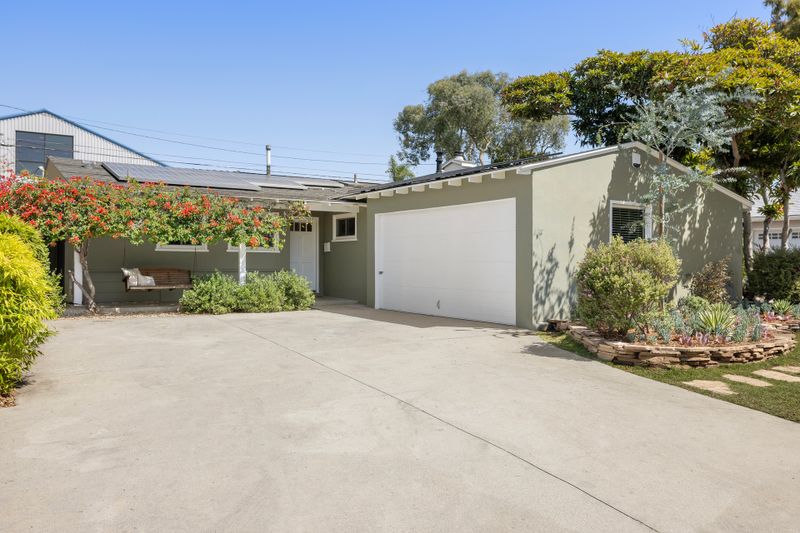
Buy a home in Los Angeles and the county sets a new assessed value at market value. Most of what lands in your first year of tax bills follows from that one step.
The tax is roughly 1% of the new value, plus voter-approved debt and any direct assessments, according to the Los Angeles County Auditor-Controller. There is also a second bill, separate from the annual one. We'll take the first year in order.
The county sets a new value when you close
Proposition 13 treats a sale as the moment a property is reassessed. The new number is called the base year value, and the LA County Assessor's factsheet for new owners says it is set at market value. Your purchase price is a rough stand-in for it. The Assessor sets the figure, not your contract.
After that, reassessment to market value generally happens only when ownership changes or new construction is completed, says the State Board of Equalization.
What goes into the rate
The base tax is limited to 1% of value. Voter-approved bonded debt can push the total higher, and the County says the total does not exceed 1.25% in most of Los Angeles County, per its 2025-26 Taxpayers' Guide. Direct assessments for things like sewer, garbage, lighting or sidewalk repair are listed separately and added on top.
Every property also sits in a tax rate area with its own mix of taxing agencies. The County reports 13,197 of them, so two homes at the same price can carry different rates. Treat any estimate, ours included, as a range.
The supplemental bill is separate from the annual one
A supplemental bill covers the gap between the seller's assessed value and your new base year value, for the part of the fiscal year after the sale. The County Treasurer and Tax Collector describes it. The fiscal year runs from July 1 to June 30. The lien attaches on the first day of the month after the month you close, and the bill goes to you as the new owner.
How big the first bill is depends on how many months are left. The State Board of Equalization publishes proration factors by effective date, and a few of them are below.
| Effective date | Proration factor | Share of the year left |
|---|---|---|
| July 1 | 1.00 | 12 months |
| October 1 | 0.75 | 9 months |
| January 1 | 0.50 | 6 months |
| March 1 | 0.33 | 4 months |
| May 1 | 0.17 | 2 months |
Close between January 1 and May 31 and you get two supplemental bills, one for the rest of that fiscal year and one for the next. Closings from June through December produce one bill.
The seller's prior-year taxes are typically prorated in escrow, so you generally do not pay them separately. The supplemental bill is a different matter. It goes straight to you, and the Taxpayers' Guide says not to expect a lender to pay it from an impound account unless the lender has said it will.
New owners are also required to notify the Assessor of a transfer, according to the County's 2026-27 bill insert. It points to the Assessor's reporting instructions for avoiding interest charges or other penalties.
You can file an application to appeal a supplemental assessment within 60 days of the mailing date shown on the supplemental tax bill.
Run the numbers on your own purchase
Multiply your purchase price by the rate. The table uses 1% as the floor and 1.25% as the level the County says most of Los Angeles County stays under. Your real rate depends on your tax rate area, so read these as rough ranges. They leave out direct assessments and exemptions.
| Purchase price | At 1.00% | At 1.25% |
|---|---|---|
| $800,000 | $8,000 | $10,000 |
| $1,000,000 | $10,000 | $12,500 |
| $1,500,000 | $15,000 | $18,750 |
| $2,000,000 | $20,000 | $25,000 |
For the supplemental bill, subtract the seller's assessed value from your price, multiply by the rate, then by the proration factor. That is the BOE's method. Say you buy at $1,000,000 and the seller's assessed value was $400,000. The difference is $600,000, and at 1.25% that is $7,500 for a full year.
If the reassessment takes effect on March 1, your first bill is about $2,475 (0.33 times $7,500). The second, for the next fiscal year, is about $7,500. That is a hypothetical, not a quote.
The homeowners' exemption lowers assessed value by up to $7,000 for an owner-occupied primary residence, per the Auditor-Controller. The Assessor's factsheet puts the saving at approximately $70 a year. It is small, and you have to claim it with the Assessor. The Board of Equalization says it can apply to a supplemental assessment if you occupy the home as your principal residence within 90 days of purchase.
When the regular bills come due
The annual secured bill has two installments. The first is due November 1 and becomes delinquent after December 10. The second is due February 1 and becomes delinquent after April 10, according to the Treasurer and Tax Collector's 2026-27 bill insert. A 10% penalty is added to each late installment, plus a $10 cost on the second.
Supplemental bills do not follow that calendar. The County's property tax FAQ says they carry their own due dates, shown on the bill. Check the due date and any penalty terms when one arrives.
After year one, your value can rise 2% a year at most
Once the base year value is set, it can rise each year by an inflation factor that cannot exceed 2%, according to the State Board of Equalization. For the 2026 roll, the Board told county assessors on January 13, 2026 to use 1.02, because the California Consumer Price Index rose 3.307% between August 2024 and August 2025, which is above the cap.
The cap limits the rise in assessed value, not the rise in your bill. Voter-approved debt rates and direct assessments can change from year to year. Countywide, the Assessor reported that the 2026 roll grew 4.42% to $2.272 trillion, and that the 2% inflation factor alone added about $43 billion, according to the County's July 14, 2026 announcement.
Similar homes can end up taxed very differently. Longtime owners generally have lower assessed values than recent buyers, whose values tend to sit near market levels, per the BOE's overview. If you are weighing a transfer from a parent or an older home's tax base, see our guide to Prop 19.
Transaction costs beyond property tax are covered in our Measure ULA explainer, and older homes may be eligible for the Mills Act program.
If you are buying or selling and want to talk through how these costs fit your plan, contact us.
Sources
- Los Angeles County Auditor-Controller — 2025-26 Taxpayers' Guide
- Los Angeles County Assessor — Real Property Assessments: Valuing Your Property factsheet, August 1, 2021
- California State Board of Equalization — California Property Tax: An Overview (Publication 29, March 2025), March 1, 2025
- Los Angeles County Treasurer and Tax Collector — Supplemental Secured Property Tax Bill
- California State Board of Equalization — Supplemental Assessment
- Los Angeles County Treasurer and Tax Collector — Annual Secured Property Tax Bill Insert 2026-2027, July 1, 2026
- Los Angeles County Treasurer and Tax Collector — Frequently Asked Questions
- California State Board of Equalization — 2026-27 California Consumer Price Index (Letter to Assessors No. 2026/002), January 13, 2026
- County of Los Angeles — LA County property values surpass $2.2 trillion, July 14, 2026
Stay informed
Receive our latest writing on architecture, culture, and the Los Angeles market.
